

For many growing Applied Behavior Analysis (ABA) clinics, paper binders, physical stopwatches, and sprawling spreadsheets represent familiar territory, but it is time to consider an ABA Data Migration to digital systems. While manual systems feel manageable during a practice’s early months, they quickly become vulnerable bottlenecks. Stacks of physical binders invite compliance gaps, slow down progress graphing, and make cross-team collaboration cumbersome.
Transitioning to secure digital platforms is essential for long-term growth and audit readiness. However, the prospect of migrating historical client records and retraining clinical staff can feel overwhelming. To help clinic directors modernize without interrupting ongoing care, we have outlined a practical, stress-free 30-day migration blueprint.
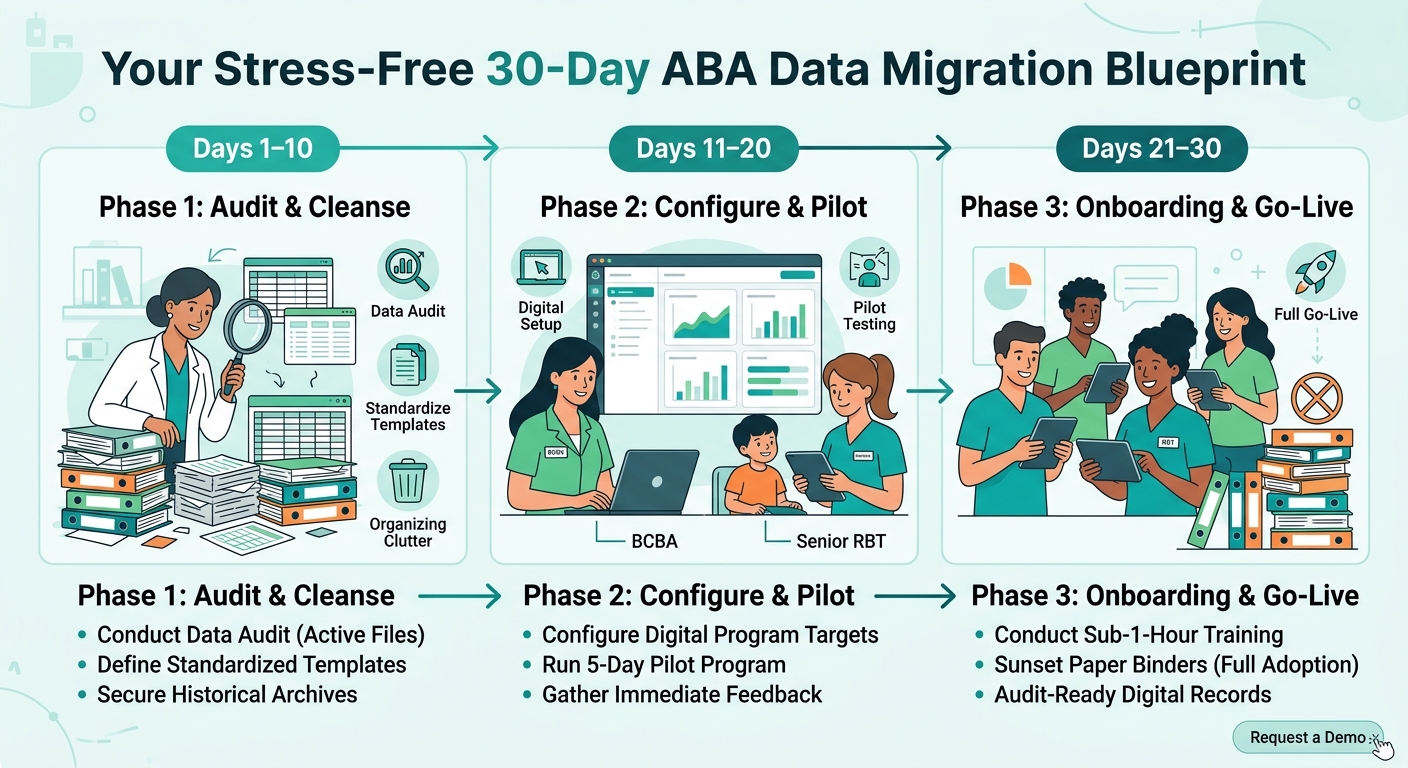
Before moving records to a digital platform, you must determine what data actually needs to migrate and eliminate unnecessary clutter.
Phase 1 Action Steps
- 1. Conduct a Data Audit: Review active client files to identify which historical baselines, Behavior Intervention Plans (BIPs), and target lists are immediately necessary for ongoing sessions.
- 2. Secure Historical Archive Protocols: Determine how past client records will be archived or digitized in compliance with theOntario IPC Guidelines on Safeguarding Personal Health Information.
- 3. Define Standardized Templates: Standardize target definitions and data collection formats so that when records enter the new system, they follow a uniform structure across all client files.
Taking time to cleanse your files ensures you do not migrate disorganized spreadsheets or redundant paperwork into your new software environment.
Once your records are audited, configure your digital platform and run a controlled pilot test to iron out any operational wrinkles.
Phase 2 Action Steps
- 1. Configure Digital Program Targets: Set up active skill acquisition programs, interval timers, and frequency targets within your software dashboard usingeasy ABA data migrationprotocols.
- 2. Run a 5-Day Pilot Program: Select one or two clients and pilot the digital system with a senior Registered Behavior Technician (RBT) or BCBA.
- 3. Gather Immediate Feedback: Review pilot session notes and graphing outputs to ensure the platform captures data cleanly without disrupting daily therapy workflow.
Aligning your pilot setup with the BACB Ethics Code for Behavior Analysts guarantees that treatment integrity remains high throughout the transition phase.
The final phase focuses on staff training, rapid adoption, and phasing out paper binders entirely.
Phase 3 Action Steps
- 1. Conduct Sub-One-Hour Training Sessions: Host interactive training workshops where RBTs learn to log data and complete session notes in under an hour.
- 2. Run Parallel Logging (Briefly): For the first 48 hours of go-live, allow staff to cross-check digital entries against backup notes to build complete user confidence.
- 3. Sunset Paper Binders: Formally retire physical binders, shifting all active data collection, graphing, and supervisor reviews directly to the digital workspace.
Maintaining clear documentation standards during and after migration ensures your practice remains fully prepared for reviews under the CPBAO Practice Guidelines for Standardized Documentation.
Clinical onboarding tools are designed specifically to take the friction out of moving from paper binders to secure digital workflows.
Ditching paper binders not only saves countless hours of administrative work but also empowers your entire clinical team to focus on what matters most: client progress.
Transform your clinic’s operations with a smooth, stress-free digital transition. Request a Demo with My ABAKiS Today to discover how simple migrating your client data can be.
